
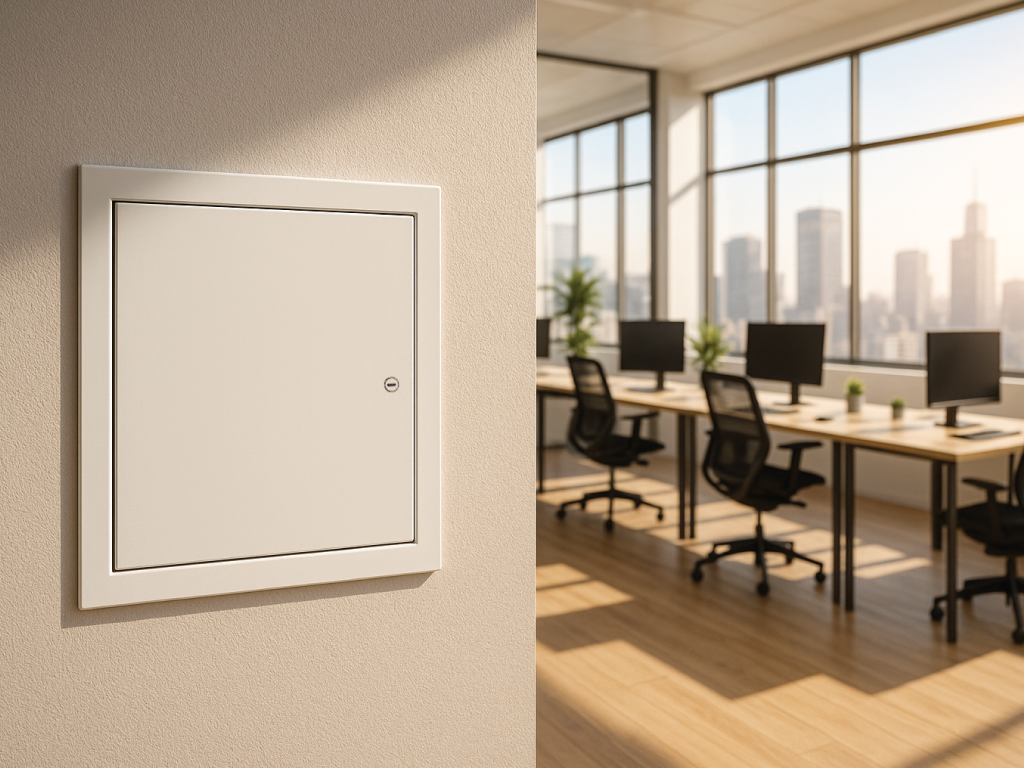
Summer is in full swing, and so are the headaches—sky-high cooling bills, uneven indoor temps, and HVAC systems pushed to the edge. Everyone involved in a build or retrofit feels the pressure. Property managers handle the complaints, designers take the blame for poor airflow, and builders scramble to find the source of the problem.
More often than not, it comes down to something small but significant: uninsulated access panels. When heat slips through walls or ceilings, it chips away at thermal performance, driving up energy costs and undermining the entire system, no matter how efficient the HVAC setup is.
With tighter budgets, stricter energy requirements, and tighter timelines, teams need components that perform reliably, install quickly, and support long-term efficiency, without adding complications. That’s where a smarter access solution can make all the difference.
Here’s how insulated access doors help keep projects cool, compliant, and on track when the heat is on.
Prioritize Thermal Efficiency
Every thermal envelope is only as strong as its weakest spot. Standard access panels often become heat transfer points, especially when they lack insulation or proper seals. In the summer, this puts an extra load on cooling systems and spikes energy use.
Insulated access doors help break that pattern. They support thermal performance in construction by maintaining consistent internal temperatures and helping keep the building envelope sealed and efficient.
Want to stay ahead in the industry? Tap into expert insights, practical solutions, and the latest advancements in access door design. Stay connected with the construction community and explore valuable tools and guidance at the Construction Innovation Resource Center.
Reinforce Sustainable Building Solutions
Moisture control is important in warm climates. Moisture seepage through unsealed panels leads to long-term issues like mold, corrosion, and material breakdowns.
Insulated access panels come equipped with materials that resist both heat and moisture. That dual protection supports sustainability targets by extending the lifespan of systems and reducing the need for frequent repairs or replacements. Less maintenance means less waste—something both contractors and clients can get behind.
Related: 10 Surprising Ways Access Doors and Panels Are Transforming Modern Construction Builds Near You
Reduce Costly Callbacks From Cooling Complaints
After the project handover, one of the most common complaints is uneven cooling. Occupants report hot spots or HVAC inefficiencies, and the builder gets the call.
But sometimes, it’s not the system but the access door. An uninsulated panel in a return plenum or ceiling cavity can disrupt airflow or allow heat gain.
Choosing insulated options during installation prevents that. It’s one of those small design moves that quietly supports system balance and client satisfaction. Having these energy-efficient access panels also reduces the need for post-install adjustments, saving time and protecting reputation.
Deliver Moisture-Resistant Access Without Delay
The longer you wait on the right panel, the more likely you are to compromise quality. And swapping in a standard panel just to meet a deadline often creates problems later.
High humidity means swelling, warping, and trapped condensation in access areas. Moisture resistant access panels are built to handle those risks without holding up the schedule.
Look for models with sealed edges, corrosion-resistant materials, and an established R-value. Many are stocked and ready to ship so that you can meet performance and procurement demands at the same time.
Speed Up Crawl Space Inspection and Utility Access
Summer work often involves underfloor systems, where crawl space access panels are essential. Insulated doors offer an extra benefit here—they help regulate temperature swings between the conditioned interior and the humid subfloor.
This makes inspections more efficient and protects pipes, ductwork, and electrical lines from condensation or overheating. Access doors and panels that provide insulation ensure access points don’t become problem zones over time.
To Sum It Up
Heat brings challenges—but it also opens the door to smarter solutions. Upgrading to insulated access doors can help maintain cooler interiors, lighten the load on HVAC systems, and prevent costly callbacks.
Access Solutions Hub is here to guide your decisions with trusted insights. But when it’s time to fine-tune specs or choose the right product for your build, a conversation with a specialist makes all the difference.
For expert support and access door recommendations that align with your project needs, you can reach out to our trusted partner, Best Access Doors, at 1 (888) 655-3711. A quick call can save you hours and help you get the right fit, the first time.
Is this article helpful to you?
Leave a Reply